What is a Magnetic Drive Seal-less Pump? Advantages, Disadvantages, and Applications
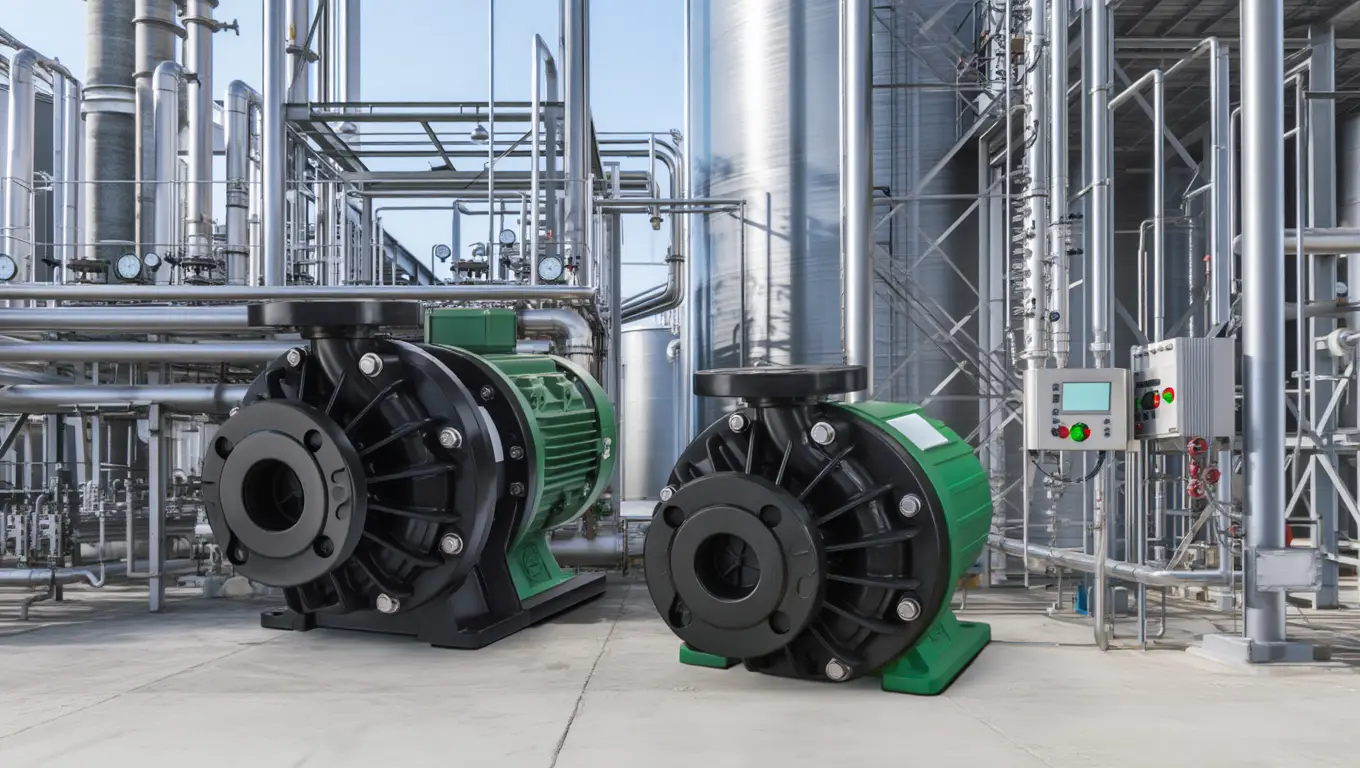
# What is a Magnetic Drive Seal-less Pump?
A magnetic drive pump (or seal-less pump) is a type of centrifugal pump that uses magnetic coupling instead of a traditional mechanical seal to transfer torque from the motor to the impeller. This design eliminates the need for a dynamic shaft seal—often the weakest point of conventional pumps—thereby reducing leakage risk and maintenance frequency.
In a magnetic drive system, two magnets are used: one connected to the motor shaft (the drive magnet) and another attached to the impeller (the driven magnet). These magnets rotate synchronously, allowing torque transmission through a containment shell without direct contact.
This mechanism creates a completely sealed environment, ideal for handling corrosive, hazardous, or toxic fluids commonly found in chemical, pharmaceutical, and semiconductor industries.
# Why Use a Seal-less Pump? Understanding the Pain Points
In many industrial settings, maintenance engineers and procurement managers face common challenges:
-
Leakage issues caused by worn mechanical seals
-
High maintenance and downtime costs
-
Difficulty ensuring safety when handling aggressive chemicals
A magnetic drive seal-less pump directly addresses these pain points. By removing the mechanical seal, it minimizes fluid leakage, simplifies system maintenance, and increases operational safety—particularly valuable in cleanroom or hazardous fluid transfer environments.
# How Does a Magnetic Drive Pump Work?
The working principle can be summarized in three stages:
-
Magnetic Coupling Transmission:
The motor rotates the outer magnet, creating a synchronized rotation of the inner magnet connected to the impeller. -
Non-Contact Torque Transfer:
Torque is transmitted through a containment shell, maintaining a completely sealed fluid chamber. -
Centrifugal Flow Generation:
The impeller generates fluid flow according to centrifugal force, similar to conventional pumps, but without any mechanical shaft penetration.
| Component | Function | Benefit |
|---|---|---|
| Drive Magnet | Transmits motion from motor | No physical contact needed |
| Driven Magnet | Transfers torque to impeller | Enables seal-less design |
| Containment Shell | Separates wet and dry sides | Prevents fluid leakage |
| Impeller | Moves the fluid | Maintains flow efficiency |
This design ensures zero shaft leakage, even under high-pressure or corrosive conditions.
# Advantages of Magnetic Drive Pumps
-
Leak-Free Operation:
No shaft seal means no leakage—ideal for handling acids, solvents, or hazardous liquids. -
Low Maintenance:
Fewer moving parts and no seals to replace reduce long-term maintenance costs. -
Enhanced Safety and Environmental Compliance:
Perfect for chemical and pharmaceutical applications where containment is critical. -
High Chemical Resistance:
Many models use corrosion-resistant materials such as ETFE or PVDF. -
Energy Efficiency:
Magnetic coupling reduces friction losses, improving energy efficiency in continuous operations.
# Disadvantages and Limitations
While magnetic drive pumps offer many benefits, users should also consider these limitations:
-
Not suitable for fluids with solids: Particulates can damage the internal components or block the impeller.
-
Torque limit: The magnetic coupling has a maximum torque capacity; overloading may cause decoupling.
-
Temperature sensitivity: Magnets can lose strength under extremely high temperatures.
-
Initial investment: Higher upfront cost compared to mechanical seal pumps, though offset by lower maintenance over time.
# Industrial Applications of Magnetic Drive Pumps
| Industry | Typical Use Case | Pump Material Example |
|---|---|---|
| Chemical Processing | Acid and alkali transfer | ETFE or PVDF |
| Pharmaceutical | Purified water and solvents | Stainless steel |
| Semiconductor | Chemical delivery in wafer cleaning | PFA-lined pumps |
| Water Treatment | Sodium hypochlorite or fluoride dosing | PP or PVDF |
| Electroplating | Circulation of plating solutions | PVDF or CFR-PP |
These industries require precise chemical handling with minimal risk of contamination or leakage—making magnetic drive pumps the preferred choice.
# Market Trends in Seal-less Pump Technology
Global demand for seal-less pumps continues to grow due to stricter environmental regulations and increasing focus on safety in chemical transport.
According to Grand View Research, the global sealless pump market is expected to expand steadily through 2030, driven by adoption in semiconductor and pharmaceutical manufacturing.
# Why Choose ASSOMA INC.?
ASSOMA INC. is a leading Taiwan-based manufacturer specializing in plastic magnetic drive pumps. With over 40 years of experience, ASSOMA’s products are recognized for their corrosion-resistant design, high energy efficiency, and reliability in chemical and wastewater systems.
The company’s AMX and AMP Series Magnetic Drive Pumps feature advanced bearing materials and optimized flow paths to ensure stable performance even under aggressive fluid conditions.
ASSOMA also provides customized pump solutions for OEM and system integrators who demand long-term operational safety and durability.
# Conclusion: Optimize Your Fluid Transfer Systems
A magnetic drive seal-less pump offers significant advantages for operators seeking leak-free, safe, and low-maintenance fluid transfer solutions.
If you’re looking for a reliable and efficient magnetic drive pump for your operation, contact ASSOMA INC. to learn more or request a consultation with their technical experts.